Tag Archive for: professional organizers

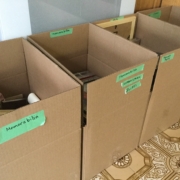
4 boxed that are labeled very specifically with what is inside to help make downsizing less stressful.

7 Tips to Ease Stress When Downsizing

Thinking about downsizing? Ask yourself these questions:

Do you look around your home and think you have too much to manage?

Are your kids grown up and living elsewhere, leaving you with a large home to maintain?

Do you want to save time and money living in a smaller space?


Downsizing could be right for you if you’ve answered yes to any of these questions, whether you’re an empty nester, want to save time and money, or crave a simpler life.


No matter the reason, preparing to downsize your home involves many moving parts that require planning, coordination, decision-making, and motivation.


Here are 7 tips to make downsizing to a smaller home easier and more manageable:


  1. Give Yourself Plenty of Time


Downsizing is a dynamic process that requires many decisions about what to keep and what to let go of. It takes time, energy, and solid planning to carry it out successfully.


Keep in mind, you didn’t collect all the stuff in your house overnight, so it will not be a quick fix to get it all sorted out either.


To avoid unnecessary stress and overwhelm, set aside at least 2-4 weeks (2-4 months is even better) to downsize your belongings. Less rushing means better decision-making which helps ease the pressure you might feel during the process.


Recruiting family, friends, or professionals (we’ve got you covered at Simply Home Downsizing) can also help you feel calmer, more in control, and supported throughout the process of decluttering in your old home and planning for your new one.


  1. Create a List of Your Essentials


When downsizing it’s important to consider what items you really want and need to bring to your new home.


The best way to determine what your “must-bring” items are, is to create a list with two columns. One column for Essentials (clothing, toiletries, furniture, linens, appliances, tech, etc.), and the other column for Non-Essential & Important (memorabilia, photos, décor, collections, etc.). Place the list in an accessible location so you can easily add or subtract items as you sort through the items in your home.


Downsizing is a great time to take stock of what you own to determine which items you use, need, or love. Are your sheets looking a bit worn? Do you have old devices stashed away in a drawer? Are there chipped unused dishes on your shelf?


This is a great time to let go of items that no longer serve you, so you can make space in your new home for what does. Remember your end goal – enjoying your new smaller home.


  1. Set Up a Sorting System in Every Room


As you go through your belongings, there will be many decisions to make. To stay on track and organized, label three boxes or bins as “Use in New Home” “Store for New Home” “Do Not Keep”.  As you sort, place items into their appropriate box, doing this in every room of your home.


Some items will be easy to categorize, while others may be more challenging.


If you’re feeling stuck or unsure, ask yourself, “Will I need, use and enjoy this item in my new home?”


If you’re still unsure, you can always try the Marie Kondo method of holding up each item and asking if it sparks joy.  If it does, keep it; if not, it may be time to let it go. Advice from a trusted friend, family member or trained Simply Home Downsizing organizer can also help you in the decision-making process.


Once your “Use in New Home” and “Store in New Home” boxes are complete, place them in one area to make packing easier.


PRO TIP: Don’t forget to keep suitcases and bags accessible to contain the essentials you’ll need right away in your new home. 


Your “Do Not Keep” boxes require a more thorough plan, as outlined in the next tip.


  1. Create an “Unwanted Items” Plan


Once you know which items aren’t coming to your new home, you have several options for what to do next:


  • Toss: If things are damaged beyond repair, throw them away and move on. Be discerning.
  • Recycle: Self-explanatory, although you might be amazed at how much you can actually recycle.
  • Donate: Someone can likely benefit from your discards if they’re in good shape. Local charities, churches, shelters, etc., accept certain donations, as do online groups such as Freecycle, Buy Nothing, or Facebook Marketplace.
  • Yard Sale: Sell your unwanted items on your street to make money and connect with neighbours. Beware, yard sales are time and labour-intensive, and the payout may not be substantial.
  • Sell Online: If you have items of value (furniture, art, electronics, collections), you can try selling them online through Kijiji, Craigslist, or Facebook Marketplace.
  • Online Auction:  Hire a company (Ex: MaxSold) to set up your virtual sale. When items sell, you get a percentage. Beware, not everything is guaranteed to sell, and the payout may be less than you anticipated.
  • Pass On: If you have unwanted heirlooms, consider taking pictures of them, passing them onto family members, donating them to charity, or turning them into something useful or artful (Ex: quilt)


  1. Go Digital


Most homes contain plenty of paperwork, videos, and photos, which can add to the clutter in your home. As you begin the downsizing process, consider digitizing as much as you can.


Now is a good time to sort through bills, receipts, contracts, warranties, records, pamphlets, flyers, etc. Shred or recycle anything you don’t need, store what you do need in clearly marked bins (Ex: 7 years of taxes in Canada) and scan documents to decrease paper clutter.


Photos, albums, movies, and music can also be converted into digital files, which will free up space.


Whether you do this on your own (you’ll need some technical equipment to do so) or hire a digitization service or specialist, saving everything to a hard drive or to the cloud, will enable you to keep important documents and memories while managing clutter in your new home.


  1. Plan Your New Layout in Advance


When you move into your new home, you want to feel confident that everything you’re bringing will fit and have a purpose. Measure each room, including closets and usable wall space, to ensure your large items (Ex: furniture, appliances) work well, and the flow of your home feels right.


Whether or not you’ll have a garage, basement, or locker, you’ll want to maximize your storage. Some suggestions: create built-in storage, maximize vertical wall space, choose multifunctional furniture, add a storage bench, take advantage of hidden spaces (Ex: under stairs, cabinet doors, inside closets), and use baskets, bins, and boxes to contain clutter.


As you plan your new life in your smaller home, avoid the temptation to buy too many new items before you move. Planning how a bed, couch, or fridge will fit ahead of time makes sense, but until you get a sense of the space you’re living in, it’s hard to know what other items will work best.


Be patient – there will be time to decorate after you move in! You can start a wish list for items you’d love.


Always keep in mind why you wanted to move to a smaller home – more spaciousness and less clutter, right?


  1. Ask for Help from Friends, Family, or Experts


Downsizing your home is a huge undertaking and challenging to do alone. To help minimize stress, frustration, and overwhelm, ask friends and family to help you:

  • Sort items into categories (Ex: all cutlery in one place, all photos together)
  • Decide what to keep and what to let go of
  • Remove items from your home you no longer want, use, or need
  • Plan or host a yard sale to sell your unwanted items
  • Measure spaces in your new home
  • Digitize your photos, files, videos, and music
  • Transport items to a storage unit, donation centre, recycling facility, etc.
  • Pack


If you’re looking for professional support to downsize successfully from start to finish, contact us at Simply Home Downsizing.


Downsizing can be physically and emotionally challenging. These seven tips will help you declutter, sort, purge, organize, and pack more effectively, setting you up for success at each stage of your downsizing journey.


We’re always here to help you with your downsizing journey! Please reach out to us at: info@simplyhomeinc.ca
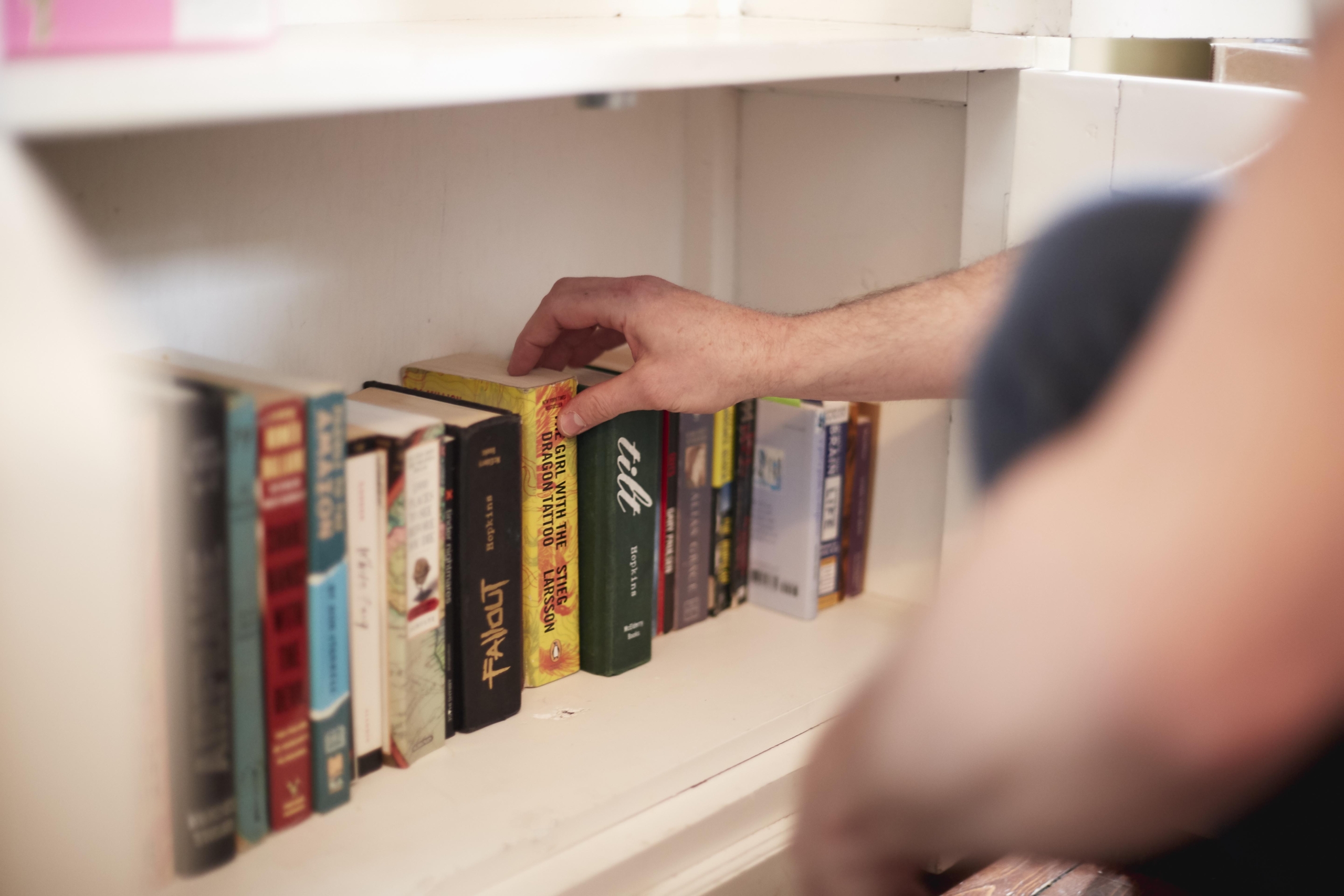

 

Image of someone organizing their bookshelf

3 Ways Successful Professionals Can Overcome Being Overwhelmed and Organize Their Homes

Many successful entrepreneurs, educators, creatives, and leaders wonder how they can thrive professionally yet feel overwhelmed and stuck when trying to organize their homes.

We don’t assume we can adjust our spines, create mortgages, or repair broken water pipes without training, so why is it different when it comes to organizing our living spaces?

As professional organizers, we often hear, “Why is it so hard to start? Why can’t I just do this? What’s wrong with me?”

Nothing is wrong with you!

You haven’t been trained to set up systems, structures, and supports (physical and mental) to help you declutter and organize your home, so no wonder you feel frustrated & overwhelmed.

3 ways to overcome that overwhelmed feeling that prevents you from successfully organizing your home:   

  1. Imagining how you’ll feel after making organizing progress 

Start by asking yourself, “What will an organized space LOOK and FEEL like? Then, take action.

PRO TIPS: Want to eat healthier? Imagine your pantry full of nourishing snacks. Want to relax more? Envision a calm reading space. Crave more simplicity? Imagine a streamlined home.

The power of your imagination cannot be underestimated – once you envision the change, your brain kicks into gear to support your intention.

  1. Starting easy, starting small  

To avoid feeling disappointed and dejected, not to mention exhausted, start with an organizing project that is not emotionally or physically demanding.

PRO TIPS: Instead of tackling an entire room or space, write out 3 goals on a sticky note, choose one category to organize, or declutter one drawer.

By starting with less emotionally taxing organizing tasks, your skills, confidence, and momentum will increase, which will make decision-making and moving forward easier.

  1. Kicking perfectionism to the curb  

Many derailed home organizing projects result from trying to be perfect. Let go of high expectations and trust that your efforts will pay off.

PRO TIPS: Live in a small condo? Use multifunctional structures and storage solutions. Cluttered creative? Set up specific workstations for your creative pursuits. Scattered online entrepreneur? Create a focused workspace.

To get and stay organized, your systems must align with your unique lifestyle and space.

For busy, successful professionals struggling to find organizational success at home (like they do at work), tapping into your imagination, starting simple and small, and letting go of perfectionism can lead to organizational success.  

For support in any of these areas, contact us at info@simplyhomeinc.ca and we will help you set up systems, strategies, and supports to help you succeed. www.simplyhomeinc.ca


Image of 7 orange files labeled and in alphabetical order

How to Create a Personal Filing System by Categorizing Your Life

Whether you’re considering a move, downsizing, or making a major life transition, one of the most important things to have in place is a well-organized personal filing system. And now that tax time is upon us, there is no better time to start.

Whether digital or paper-based, having clear categories to contain your important information is vital to keeping you organized and on track.

Without clear categories, stress, overwhelm and panic increase, which isn’t conducive to completing key tasks.

So, how do you decide which categories to use when creating a home filing system?

Although we’re unique lives, there are life categories that tend to repeat when organizing your files. This chart will help you start, modify, and update your personal filing system.


Major Folders


Potential Categories to Include


Notes

HEALTH ·       Reports, records, tests

·       Vaccination info

·       Assessments

·       Previous operations

·       Resources

Items in these categories can be kept inside one major folder OR in each family member’s file. The choice comes down to which division makes more sense to you.
INSURANCE ·       Home

·       Life

·       Car

Can be filed separately in major folder OR in specific item folders.

Ex: Auto policy in Vehicle folder

VITAL RECORDS ·       Birth certificate

·       Social Insurance Card

·       Marriage certificate

·       Will

·       Immigration papers

Can be filed separately OR in folders related to the person

Ex: SIN in family member file


TAXES ·       Current Year (for all claimable receipts, can be sub-divided)

·       Previous Years (with tax info sub-divided by year)

Once your current year is complete, place contents in “Previous Years”. Remove and shred the oldest file.

Ex: Shred 2013 once 2021 is filed. In Canada we must keep 7 years.

FINANCIAL ·       Banking records

·       Credit card documents + bills

·       Loan documents

·       Investment records

·       Memberships (Ex: gym)

Create one file for each account/credit card/loan/investment, etc.
HOME
  • Maintenance
  • Warranties
  • Real estate documents
  • Outdoor/Landscaping
  • Renovations
  • Décor
  • Rental property
Whether you create separate files for each category OR include them all in one major folder, keep receipts, contact info, and correspondence for each category as needed
VEHICLES ·       Purchase Agreement

·       Ownership

·       License + registration

·       Insurance*

Create a separate file for each vehicle.

*Insurance can be filed here or in Insurance.

WORK ·       Contracts + Salary info

·       Benefits

·       Major Projects

·       Job Applications

·       Resumes & Cover Letters

·       Potential Jobs

Create a file for each job, past and present.


Our focus is on creating a home filing system. If you run a business, a more robust system will apply.

KIDS ·       School Reports & Records

·       Assessments/Tests

·       Extracurricular classes, courses, sports teams, etc.

·       Summer Camp

·       Parenting*

Create a separate file for each child.

*Parenting resources can be filed here OR in Personal Development OR elsewhere.

PETS ·       Health records

·       Vaccination information

·       Grooming

·       Boarding & travel

 
TRAVEL ·       Passports

·       Health & Vaccinations

·       Past Travel

·       Future Travel ideas

A note about memorabilia. You can file pictures, correspondence, tickets, postcards, etc. OR set aside in a clearly marked bin.
FORMAL EDUCATION ·       Transcripts

·       Letters of recommendation

·       Copies of degrees & certificates


PERSONAL DEVELOPMENT ·       Personality/Self-assessment tests

·       Books, podcasts, articles, etc.

·       Art + Design + Craft

·       Courses

·       Wellness

·       Spirituality

 
SHOPPING ·       Receipts for gifts you’ve given

·       Gift ideas


PRO TIPS for a paper-based personal filing system:

  • Create an index with your categories laid out (like this chart!) and place in a prominent place
  • File chronologically with most recent documents in the front for easy access
  • Use easy to replace labels or green tape for easy modifying or replacing
  • Keep empty file folders, labels, and markers close by for immediate access
  • If combining different files in one major folder, clip them together for better organization
  • Memorabilia is often best to store in a clearly labelled separate bin


PRO TIPS for a digitally based personal filing system:

  • Use the same categories for digital files as you do for your paper files – your brain will thank you!
  • Create a table of contents or index and keep it handy for easy referencing and adjusting
  • If using an app, consider its functions, as well as the time and energy required to use it well
  • Be as specific as possible with file names Ex: Emily Grade 4 report card 2021” vs “Sally school”
  • Label all folders using the same format. Ex: HOME > Warranties > Fridge 2020


Organizing digital and paper files can feel overwhelming, as our life priorities shift, which means files and folders must be created and deleted regularly. A filing system is never static nor perfectly done.


By taking time to think through your life categories, you’ll set yourself up for success and access important information when you need it most. All conveniently placed in your personal filing system.


Need help with creating a personal filing system in your home? Contact us here or email us info@simplyhomeinc.ca to talk about how we can help you create a paper filing system that works!

Image of an organized towel basket. In a brown wicker basket are three towels that are rolled. 1 light yellow, 1 baby blue, and one baby pink. The basket is on top of a wooden shelving unit. Only the top shelf is in frame. Beside the basket is a small tea candle in a metal geometric holder. The wall behind the basket is white.

Organizing: 5 Simple Tips to Help You Ease into Fall Home Decluttering

Fall is here and as we enjoy the cooler temperatures, cozy clothes, and pumpkin-spice lattes, we might also be feeling more stressed out with new commitments, appointments, and schedules to manage.

After the laidback-ness of summer (slightly altered due to Covid we know), fall can feel jarring, busy, and cluttered. The pace of life seems to quicken, which often leads to more clutter, disorganization, and stress in your home.

Here are 5 decluttering and organizing tips to help you enjoy your home this fall:


1. Create a Decluttering and Organizing Plan & Schedule

No doubt about it, having goals and a well-thought-out game plan for getting your home organized will increase your chances for success.

Whether you choose to do this on paper or digitally, we suggest thinking through your answers to these three questions:

  •  How does the clutter in “x” area make you feel?
  • How do you want to feel after you declutter & organize “x” area?
  • What action steps can you start taking to fill the gap between # 1 and # 2?

2. Just Start

Often the hardest part when decluttering and organizing is starting. It can feel overwhelming, stressful, and insurmountable when trying to start.

Once we start, momentum kicks in and it’s easier to stay on track, but getting to this stage is not always easy.
Realizing that everyone’s needs are unique, here are 5 ways to kickstart your decluttering and organizing project/s

  •  List all your ideas (see #1 above!). Getting them out of your head makes room for action-taking
  • Gather your supplies – recycle/trash/donate bags, sharpie, labels
  • Set a timer – short bursts of 15 min are good to start. Once you start, you’ll want to keep going!
  • Pick a non-sentimental area to start with (i.e. junk drawer vs photographs)
  • Choose an area you use daily so you can see immediate results and build momentum (i.e.: front entrance)

Many decluttering and organizing projects fall short (or don’t even get off the ground) because we set unrealistic expectations for ourselves and try to take on too much at the start.

By starting with small actions, you’ll recognize what gets in your way (time, energy, strategies, motivation, or skill), and can adjust accordingly. Once you pace yourself and start seeing results, you’ll be able to harness that momentum to keep decluttering and organizing.

3. Seasonal Clothing Switch-Out & Organizing

With every new season comes an opportunity to declutter and organize more efficiently.

Now that’s it’s fall, it’s time to put away your bathing suits, beach towels, sandals, and other fun summer items. Whether you hang them in the back of the closet, place them in a non-essential drawer, or pack them into bins, they do not need to be front and centre in your home.

Instead, make it easy to use your fall jackets, scarves, hats, and boots by placing them in easy-to-access areas such as the front hall.

Choose an organizing method that works best for your space, which could mean using your front hall closet, baskets, or shelves. Having items at eye level (your prime real estate) really helps as well – this is all about making things easier!

As you ease into fall, consider using this same approach elsewhere in your home, such as the bathroom or linen closet. To make your seasonal transition easier, consider bringing fall and winter moisturizing bath and beauty products, along with warmer comforters, to the forefront.

Ensuring that only seasonally appropriate items are taking up your most valuable space will make daily life easier as you’ll have fewer things to sort through and less decisions to make.

PRO TIP: Before you pack away your summer items, review each one carefully to determine if you need/use/love the items. If not, you can recycle or donate them – no need to pack excess.

4. Declutter your pantry and food storage areas

Is your kitchen the busiest area in your home?

For many of us, this is true, which means our busy kitchens deserve a fall makeover too.

The best way to declutter and organize your pantry, fridge, and freezer, is to empty all contents – category by category, item by item. After determining what’s spoiled, past it’s due date, or inedible, either donate, compost, or dispose of the items you won’t be consuming.

Next, decide which items you consume (or want to consume) most often and place them front and centre at eye level for easy and more consistent access.

Don’t forget to give your pantry and food storage areas a good cleaning before putting items back!

5. Organize Your Digital World

As we continue to use our smartphones, tablets, laptops, and desktop computers more and more in our daily lives, it’s important to pay attention to our digital clutter.

Just as in our homes, too much digital clutter causes us to feel stressed, overwhelmed, and anxious. We know we shouldn’t be on our devices so much, but distractions and interruptions are everywhere!

Below are five simple ways to start your digital decluttering:

  1. Review your mobile apps and delete any that are not being used
  2. Remove notifications
  3. Group your mobile apps by category and create folders so you don’t have multiple screens to swipe to get to the app you want to use
  4. Delete emails as soon as you read them OR archive them – no more overflowing inboxes
  5. Group your desktop files and icons into folders. Archive or delete whatever is not current

Fall is a wonderful season and what better way to honour this transition than by decluttering and organizing our homes

Successful decluttering and organizing can certainly make us feel more grounded, calm, and joyful in our homes, but it’s not always easy to find the time, energy, motivation, and strategies to carry out this process.

The good news is that there are solutions, so if you’ve been thinking about making time for some of these fall home organizing projects and want support, contact Simply Home Downsizing, and let’s see how we can help you ease into fall.

paper

10 Ways to Reduce Paper Clutter in Your Home

Do you ever feel like you are drowning in paper? Are there bills, receipts, reminders, invitations, coupons, statements, flyers, and cards cluttering up your space, causing overwhelm and stress?

Paper clutter occurs easily unless we create systems for managing it on a regular basis. As tax time is upon us, let’s not forget how important it is to plan ahead to avoid paper overwhelm – see tip # 10!

The good news is managing paper clutter is achievable and below are ten ways to effectively organize and store the paper items you need and get rid of the paper items you don’t.

  1. Go Paperless with Statements and Bills

The best way to have less paper is to not let it enter your home in the first place! Going paperless is an important first step in decluttering paper. Transfer all your bills, statements and payments online. Even better, pay everything online, which helps timeliness and budgeting. The bonus of this is you will no longer need envelopes and stamps or trips to the mailbox.

  1. Purge your Paper

To begin, gather up ALL the paper in your home. Look in wallets, purses, bags, boxes, drawers, closets, cabinets and cars. Next, sort all papers into four piles: Recycle, Scan, Shred, or Save. Scan important tax, medical files, insurance and property documents onto your computer for safekeeping or create a file folder for key pieces of information. For memorabilia items (photos, cards, tickets stubs, etc.), put them into a labelled clear box/bin and then recycle or shred everything else.

  1. Recycle your Magazines and Newspapers

How many old magazines and newspapers are taking up space in your home waiting for that “one day” when you’ll re-read them? As this is an unlikely scenario, it may be time to recycle or donate them to a good cause. Artists and teachers often like magazines with pictures for their projects – the key is to get them out of your home soon to avoid any lingering donate piles! While you’re at it, unsubscribe from all the magazines you’re no longer interested in.

  1. Create a Filing System

There as many different filing systems to choose from, but the best ones seem to have these characteristics: they are spacious and easy to access and figure out. The key is to decide which space you will be using before buying anything. For an open desk, metal rails for hanging folders work well. In a closet, portable file bins work well, and if you need to see your files, a desk organizer works well. Whatever you decide, consider using as much vertical space as you can.

The next step is to take inventory of your life through creating categories. Give big categories like Career, Medical, Car, Pet, House, Kids, etc. a big folder. You can add sub-categories to them as you go. If colour coding helps, choose certain colours for specific categories and consider using painter’s tape instead of labels at first, as it gives you more flexibility when adding/changing items.

  1. Keep a Recycling Bag by your Front Entrance

By having a place to recycle by your front entrance, you can avoid bringing unwanted paper into your home. Worried about the visual impact? Keep a reusable bag hanging in the hall closet. Whenever you leave home, grab the bag and recycle your unwanted paper! You may also want to put up a sign indicating “No flyers” outside your front door to prevent unwanted paper clutter.

  1. Create an “Action” Area for Key Papers

We often have paper items that require us to act, often by a certain deadline. Put all those papers – RSVPs, bills, sign-up forms — in one spot. They could be clipped onto a big message board, kept  in an “inbox” tray, or mail organizer or placed in a basket by the entrance. Whichever you choose, make sure to deal with it daily or bi-weekly. Otherwise, it will just become another pile of paper clutter.

  1. Use a Calendar

By adding your important events to a calendar system, you avoid having to keep the actual paper flyers, invitations, etc. A digital calendar works well, however, if you want a non-tech version, get a desk or wall calendar. Each time you get a piece of paper with event information on it, put it into the calendar and recycle the paper.

  1. Showcase Photos and Memorabilia

If you have sentimental photos or memorabilia stored under your bed, in your closet or in a box, consider choosing your favourites to showcase. Photos and paper items can be framed or put into an album or memory box.  They can also be scanned and made into a photo book. Often, people feel overwhelmed by their photos so hiring a professional organizer can help you enjoy your memories now!

  1. Store Paper Items in the Right Places

The key to creating effective organizing systems is deciding what goes where and ensuring things get put back in their place. For everyday papers, a go-to spot that is easy to see and act on is key. Sentimental items can be displayed in nice boxes or frames on bookshelves and bookcases; coupons can be kept in a binder; office supplies (notebooks, folders, stickies, printer paper) can be kept in clear labelled containers; and recipes can be kept in a binder in the kitchen.

  1. Prepare for Tax Time

Investing time and energy into creating a system for tax-related paperwork pays off in the long run. Using a binder, labelled accordion file folder or box, label and clip all your receipts by category and keep them in one place for that tax year. When it’s time to submit your tax return, all your papers will be in one place ready to be reviewed. Once your return is complete, shred the documents you are no longer required to keep. In Canada, this is 6 years, so once your 2019 return is complete, shred the contents in your 2013 folder.

The next time you find yourself feeling overwhelmed about the accumulation of paper in your home, review these ten tips and know that if you need support to reduce paper clutter, we are here to help! Contact The Simply Home Downsizing Team at 416-819-1576 www.simplyhomeinc.ca

decluttering

Why It’s So Hard to Let Go of our Stuff

These days it seems like many people are on board with the idea of decluttering, owning less, and living more intentionally. It all makes great sense! By decluttering and choosing what items we need and love, our lives become easier to manage and we feel calmer and less overwhelmed. The added benefits of saving money (no more replacements) and time (no more wasting time looking for things) also becomes clear once we have less.

So, What Gets in Our Way? What Reasons do we Give Ourselves that Hinder Our Progress?

One way to think about it is to reflect on why we own things in the first place. Historically, objects were tools that were required for day-to-day survival – you needed an axe to chop wood, a knife to cut up meat, and shovels to dig holes. However, as society progressed, the world became more plentiful, and objects started to play a different role. They helped us do what we needed to do AND helped us confirm our worth in society.

Owning certain objects became a way to communicate. If you had a radio, you were the connection for others and had the power to disseminate information quickly…so better get a radio fast. This evolved to include many more objects, as there is no limit to what we can buy. Today, we see how quickly and easily Amazon and others can fulfill our desire to own something. As this happens, we move from being in charge of our objects to letting them be in charge of us.

So, Why is it So Challenging to Limit how Many Objects We Have, and Let Go of the Ones We Don’t Need?

In his book, Goodbye Things, Fumio Sasaki talks about the many challenges that arise when we try to discard, declutter, and downsize. He talks about the need to develop this skill, over time, so that it becomes a habit. As with other skills, you don’t just wake up and decide to become a world-class skydiver, a master chef, or fluent in Finnish. It takes time. You don’t just wake up and decide to have less stuff; you have to build the skill. Often, in trying to build this skill, we get stuck and can’t complete the task.

Ten Reasons We Get Stuck and Can’t Discard, Declutter, and Downsize Effectively:

  • It was expensive
  • What if I need it in the future?
  • I feel guilty throwing it away
  • I feel ashamed that it hasn’t been used
  • One day it will fit/work/match
  • I feel like I am throwing away an important memory
  • My pride is preventing me from letting it go
  • I feel bad for the person who gave it to me
  • It’s not the right day/time/hour/season
  • It’s just easier to leave it as is

If any of these reasons resonate with you, you aren’t alone. They are all very convincing. They can seem like truly sensible reasons to hang on to belongings we no longer need, use, or even want. However, letting go requires courage, determination and patience – and perhaps some help along the way.

The path of least resistance is common among us humans, it keeps us safe and in service of the status quo.  

Ultimately, if we can shift our thinking, imagine the feeling upon completion, and take action, we can absolutely create more time, space, money, energy and freedom in our lives.

Either alone or with professional organizing support from Simply Home Downsizing, there is a way to have less to live more.

Let’s Connect

Whether you need to organize your own space, help a loved one move into a smaller home, or manage an estate clearing, our team of experienced professionals will guide you carefully and comfortably to your desired result. Contact us today to learn more about our services.

~ The Simply Home Downsizing Team

wardrobe

Create a Simplified Wardrobe You’ll Love

Is 2020 the year to create a wardrobe that you love, that lasts, and is a true expression of who you are? If so, it is possible to create a sustainable and exciting wardrobe by taking into account these five elements.

  1. Set Your Intention – Envisioning the Future

First, being as honest as you can, you’ll want to reflect on how you feel about your wardrobe right now. Do you feel overwhelmed by the amount of clothes you own? Paralyzed by having to make daily wardrobe decisions? Guilty for not wearing what you have? All of these are common feelings to have when it comes to our wardrobes.

Now, envision how you want to feel after creating a wardrobe that suits you, your body, and your current lifestyle. Often, feeling more decisive, intentional, and excited about our clothing is a strong motivator for change. Specific examples include, “I will only keep, and wear clothing and accessories that make me feel confident and authentic” or, “I want to hang up all my clothes in one closet and never search for items again”.

  1. Acknowledging Rationalizations – This is Emotional!

Knowing how you want to feel, and look, is a great start, but we all know that rationalizations (aka excuses) are powerful forces that can easily sidetrack us. Just when we think we’re ready to let go, these “reasons” tend to get in the way of our purge:

  • This will fit when I lose weight
  • I should have one of these – doesn’t everyone?
  • This item cost a lot of money and I’ve barely worn it
  • This was a gift and I feel really guilty letting it go
  • This trend will come back one day, they always do
  • I’ll need this if I get invited to a special occasion
  • I may need this if I overuse/lose the “good” ones
  • It’s sentimental and part of my personal history
  • It’s something I wore before or may wear in the future
  • My child/cousin/friend might want it

These rationalizations can be very powerful saboteurs in our quest for less and must be addressed if we are going to cleanse our closets properly. It is best to acknowledge that our emotional attachment to our wardrobes can run deep, and it takes determination and commitment to work through these challenges to reach our goals.

  1. Implementing a Strategy – Time to Act!

Realize that you will have to overcome challenges inherent in a closet cleanse. Start your decluttering with an easy category such as socks. Gather all like items from ALL places in your home (i.e. gym bags, office, back door, closet) and put them into piles. Once you gain momentum, then move onto another category.

On your own or with someone else (non-judgmental is key!), hold up each item and ask yourself:

  • Do I like this?
  • Do I wear this?
  • Does it make me FEEL good?
  • If I didn’t own this already, would I buy it again? How much would I pay for it?

Decide if the item is for keep, donate, sell, consign, repair, return, etc. Have clear bags ready along with green tape and a sharpie for labelling. With your piles in place, ruthlessly decide what goes back into your closet and drawers. Then, donate unwanted clothes, plan a clothing swap, put returns in your car – do whatever  it takes to get the items out of your home without delay! Celebrate your progress and keep going!

  1. Capsule Wardrobe

Capsule wardrobes are a popular topic lately, and it’s no wonder given our realization that having too many clothes and accessories can be extremely stressful. Creating a capsule wardrobe is a specific type of closet cleanse that involves clearing out unwanted or unused clothes and replacing them with a small number of highly versatile garments, that can be worn together.

As everyone has different tastes and needs, there are many ways to create a capsule wardrobe. However, these tips will help in any situation:

  • Decide on a number you can work with and choose clothes and accessories accordingly. i.e. choose 50 items to wear each season. Replace old pieces with new ones when needed.
  • If decluttering is difficult, put items in a “maybe box” and place the box out of sight for 1 to 3 months. If you haven’t needed, wanted or thought about the items after the time has passed, you can let go of them guilt-free, knowing you won’t miss or need them.
  • You can also try out a capsule wardrobe for a month or two. Put your other clothes out of sight and only use the clothes in your capsule. See how it feels after the time has passed and decide your next steps.

Do your best to only keep the things you love, hold happy or important memories for you, you wear often, feel good in and suit your personal style.

  1. Benefits

After deciding, sorting, decluttering, and letting go of clothing and accessories, hopefully you will feel some of these wonderful benefits:

  • Less decision fatigue because choosing what to wear becomes less stressful
  • More organized and clutter-free closets and drawers
  • Less spending money, more saving money!
  • Increased self-confidence knowing your wardrobe has been intentionally chosen
  • Regain control of your style and no longer be a slave to fashion trends
  • Increased self-confidence learning about your personal style

Whether you create a capsule wardrobe or simply declutter your closet, remember to be purposeful with your purchases so you add things to your wardrobe that will work well for you and you’ll wear often.

If you find that you could benefit from professional support, we are here to help! Please contact us for more information.

maxsold

How Online Auctions Can Help A House Clearing

Imagine a home full of wonderful memories and meaningful experiences. Now imagine moving all the items supporting those memories and experiences. If you feel like this could be an overwhelming and stressful process, you are not alone. For many people downsizing, relocating or managing an estate, questions such as, “what do I do with all the stuff I no longer need or want?”, “how can I regain some of the costs of my valuable items?” and “how do I know the value of my belongings?” appear frequently.

Enter MaxSold, an online auction service that manages the sale of your items online.

What is MaxSold?

Founded in 1956 to meet the needs of people clearing a house, MaxSold manages the online sale of any items you no longer want or need. By providing an online portal for each individual sale, MaxSold takes away the stress of having to deal with hundreds of individual buyers over e-mail, phone and in-person like when you list things with Craigslist, Kijiji, Facebook, etc.  With MaxSold, you deal with one professional team from start to finish.

MaxSold says, “MaxSold believes that sellers deserve the transparency, ease of use, and profitability, and sellers should not have to be a technology expert, marketing expert or logistics expert in order to sell their goods.”

Not only is MaxSold a viable option for sellers, buyers also have online access to unique items in specific geographic locations that come from one home – from vintage to modern, furniture to figurines. The hope is that buyers will cherish their new treasures or give the items a new life by re-purposing or up-cycling.

The Managed Model

MaxSold has two sale models for sellers to choose from. The Managed model means MaxSold professionals take care of all photography, item cataloging, and supervising pickups. Fees are 30% + $700.

The Seller Managed Model

The Seller Managed model means that the seller is responsible for photographing, cataloging, and supervising pickup. Marketing is included and there are no up-front fees. The fee is the greater of $300 or 30%.

In both models, the MaxSold team is responsible for the auction hosting, online advertising, local marketing, notification to buyers, and collection of payments.  MaxSold will market your items and notify buyers (collectors, antique dealers, resellers and people looking for things to buy.

Once you decide which model you will be using, sellers or the Simply Home Downsizing team create “lots” of items to sell. These could be single-items (i.e. dining room table) or a collection of items that make sense being sold together (i.e. crock pot with a set of dishes). The goal is to maximize online sales by putting valuable or desirable items in different lots. Once the lots are created, photographs are taken and uploaded through the MaxSold cataloguing app to your unique seller’s page on the MaxSold website. The sale is launched (a 2-week period is suggested) and potential buyers begin to bid online.

Will Your Auction Actually Be Seen? Yes!

MaxSold advertises it’s online auctions through online classifieds, paid Facebook ads, social media platforms, estate sale websites, and more. According to their website, each MaxSold auction attracts between 10-50% new bidders who learned about it through targeted social media advertising and posts on Craigslist, Kijiji, Ebay, Auctionzip, Estatesales.net/org and more.

When a bidder registers and bids for an item in an auction, they submit their credit card information. Upon the auction close date, all successful bidders are notified, invoiced and their credit cards are processed. Taxes are collected and processed by MaxSold. Along with payment in the form of a single cheque or direct deposit, sellers will receive a full report of every item, how much it sold for, and any commission taken.

So how many items should you have? Based on the commission of 30%, having at least 50 lots makes the best sense – economically and timewise. Again, lots can include all kinds of home items – think garden tools, oil paintings, kids LEGO, or an entire bedroom set.

Benefits and Challenges of MaxSold

Benefits:

  • Quick turnaround (2 weeks) to sell decades of items
  • Ability to sell not just fine china, art and antiques, but everyday household items
  • Access to the “Quick-Worth finder” which shows every past item sold and its price
  • Minimum commissions that allow the sale of any items without judgement
  • Full view of the sale from start-to-finish, including detailed day-to-day reporting
  • Easy set-up, management, fee distribution, and turnaround for sellers and buyers

Challenges:

  • Finding time to sort through and catalogue your items into lots (Simply Home Downsizing can help!)
  • You cannot set a minimum bid on any item/lot – each lot starts at $1
  • Items cannot be removed from an auction once bidding has begun
  • You must accept the amount that your lot sells for – once an auction is set up, all sales are final
  • Unsold items are the seller’s responsibility. They can be given away or sold as-is to buyers coming to pick-up their paid items. (MaxSold claims their sell rate is nearly 100%.)

So how can you calculate the value of your crystal vases? Teak dinette set? Pinball machine? Record collection? Although there is no way to predict what an item will sell for, factors such as rarity, condition, and whether or not something is collectible and/or has a certificate of authenticity matter. MaxSold has a “Quick-Worth finder” which allows sellers to see every item that has been sold and for what price. This helps sellers gauge the value of their items.

If you are looking for a way to clear out a house quickly and thoroughly, while recouping the cost of some of your valuables, MaxSold is a viable option. At Simply Home Downsizing, we assist clients sorting and categorizing their items for a MaxSold online sale, often resulting in an easy-to-manage and positive experience for all involved. Please connect with us to learn more.

Embrace Your Inner Swede and Lagom Your Life

Do you ever feel like you have too much of some things and not enough of others? Perhaps too much clutter and not enough open space? Too much to do and not enough time to do it in? Too much stress and not enough calm?

If the “too much/too little” battle seems like a constant struggle, consider adopting lagom. Lagom is a Swedish lifestyle that translates to “having just the right amount – not too much, and not too little.”

Many believe that the word lagom comes from the time when Swedish farmers and Vikings shared drinks communally from the same horn or bowl. In this sense, lagom is seen as a force for good, connecting people to place and community, both crucial ingredients to the Swedish way of life.

What can we learn from the land of intentional design, minimalist décor, capsule wardrobes and IKEA?

Think of lagom as a process where you de-clutter and simplify your life in order to increase emotional wellbeing. What’s not to like?  When we feel like we belong in our space, have balance in our life, and a shared responsibility to our community, we tend to feel better.

So, why it is that even when we know what is just right/enough, we go overboard into excess?

Is it societal pressure to consume? The ease in which we can purchase goods 24/7? Our inability to make decisions about our belongings? All of the above?!

By implementing the “lightweight lifestyle” of lagom into our lives, how we create happiness increases. By having a more lagom life, we are apt to feel more connected, intentional and purposeful. Specific benefits include:

  • physical: less material obsession, less consumption, more de-cluttering, less cleaning
  • mental: stops mind from spiraling, more focus, embrace life consciously, more creativity
  • financial: improves as consumption decreases, thriftier, re-use items

According to Niki Brantmark, author of Lagom: Not Too Little, Not Too Much: The Swedish Art of Living a Balanced, Happy Life, “lagom is about finding a balance that works for you. It encourages curiosity and experimentation versus rigid definitions of what “just right” looks like.”

Brantmark’s top three lagom suggestions:

  1. Streamline your bedroom:Create a clean, calm space that de-clutters your mind and restores your body so you feel organized. Only keep out the essentials.
  2. Keep your space clutter-free: Manage the reality (and overwhelm) of clutter by putting items away, or in a basket/bag so they can be put away later. Donate/sell/discard what’s not being used.
  3. Make sustainability a priority. Less lights, more candles, less plastic, more re-usable mugs, bottles and bags, shop gently used, and eat your leftovers!

“Applying a sense of lagom to our everyday lives—in how we live, work, eat and play – might just be the trick for embracing a more balanced, sustainable lifestyle that welcomes the joy of existence rather than those of consumption, states Anna Brones in her book, Live Lagom: Balanced Living the Swedish Way.

At Simply Home Downsizing, we often work with clients who are trying to achieve “just the right amount” in their home, often showing up in the form of de-cluttering, organizing and downsizing. By adopting the Swedish lagom approach, we can all work towards living a more balanced, sustainable life on our own terms.

Whether you need to organize your own space, help a loved one move into a smaller home, or manage an estate clearing, our team of experienced professionals will guide you carefully and comfortably to your desired result. Contact us today to learn more about our services.

~ The Simply Home Downsizing Team

To Rent a Storage Unit or Not…That is the Question!

The comfort of consumption leads many of us to buy a lot of things; things we need, use, and love, along with plenty of things we don’t need, use, or care for.  Which means we end up accumulating a lot in our homes.

So, what do we do when there is more stuff than we can handle or store in our homes? Rent a storage unit!

Why You Should Rent a Storage Unit

Now, there are several good reasons to rent a storage unit, namely when you are moving from one home to another and the latter isn’t yet ready; you live in a city where living space is extremely costly and storing items makes better financial sense (think New York City), or you have seasonal equipment, large vehicles, etc.

Renting a storage unit for a few months can be a good temporary solution for many people. However, once you leave items in a storage unit for more than a year, the rental is no longer temporary and may not make financial or practical sense.

According to the Self Storage Association, more than half of rental units are kept for more than a year, so, what is really driving the self-storage industry, and why?

In most scenarios, it is simply a case of owning too much stuff and having a hard time letting go of it.  According to the Self Storage Association (SSA), in 1995, only one in 17 households rented a self-storage unit, whereas in 2008, one in 10 households rented a unit. We can guess why – just look at how many people are shopping at Walmart, IKEA, Costco, and online merchants every single day!

How Much Does a Storage Unit Cost?

Reports indicate that the average national monthly cost of a climate-controlled rental space ranges from $1.00 to $1.63 per square foot, which translates to about $1,300 – $2,000 a year for a 10’ x 10’ unit.

However, a storage unit’s price will greatly depend on a variety of factors, including the size of the unit, where you’re renting the unit and how long you’re renting the unit. Other special features that can be purchased include climate control, indoor unit versus an outdoor unit, items stored (RV vs. boxes), level of service (self-service vs. full service), add-ons such as packing bins and supplies, labour, and insurance (many storage items can be covered by “off-premises home insurance coverage”),

So why are People Paying These Hefty Fees?

Here’s how we are justifying the rental of all these storage units:

  1. Attachment to Stuff

For many people, getting rid of things is extremely difficult – it’s emotional and carries great weight.  A person might find it necessary to rent storage unit in order to house all this “necessary” stuff.

  1. Future Needs

If you are storing things that no longer fit or “work” in your new home, thinking that you may use these things in the future or “just in case,” you’re paying a hefty price to hold onto them. Unless your downsizing project is temporary, it’s time to sell or donate your items, and live in the here and now.

  1. Too Busy to Sell My Things

Having a yard sale or selling items on eBay or Facebook is a good way to deal with too much stuff.  Planning ahead and thinking through options before a move and subsequent rental of a storage unit makes good sense. If it is too much, hire someone to help.

  1. Too Busy to Get Rid of My Things

By leaving items in a storage unit indefinitely, you are paying a lot month after month. As the years go by, a storage unit can turn into a huge financial loss. Feeling overwhelmed and ill-equipped to deal with stuff is one reason people procrastinate, according to Psychology Today. Therefore, if it is too hard to do it yourself, hire a professional and just do it.

According to Simply Home Downsizing’s Pauline Duhart, “Indecision about what to do with extra items comes down to procrastination. People end up spending money on storage units because it is hard to make a decision.

A few questions to ask yourself as you are looking at your overstuffed garage, attic, closets and basements, include:

Would You Buy it Today? 

If you’re no longer using clothes that are out of style or furniture you put away to make room for new items in your re-modelled home, why save them?

Is it Easily Replaceable? 

Consider the 20/20 rule. If you have a used possession that you could repurchase for less than $20 or borrow it from a neighbour in 20 minutes or less, time to let it go.

Will One be Enough? 

Memorabilia and family keepsakes are an important part of peoples’ lives for sure. Perhaps choosing one truly memorable item makes sense. One item of value can keep the connection to the person/experience, no need for duplicates.

Can I Make Some Money by Letting go of Things?

Thanks to Kijiji, Craig’s List, Facebook and MaxSold, there are many opportunities to earn money by keeping less.

“We can help people transition away from renting a storage unit by de-cluttering, downsizing and organizing items before a move or transition, so that clients avoid renting a storage unit at all, saving money, time, and resources”, says Duhart.


Whether you need to organize your own space, help a loved one move into a smaller home, or manage an estate clearing, our team of experienced professionals will guide you carefully and comfortably to your desired result. Contact us today to learn more about our services.


~ The Simply Home Team