Tag Archive for: living simply

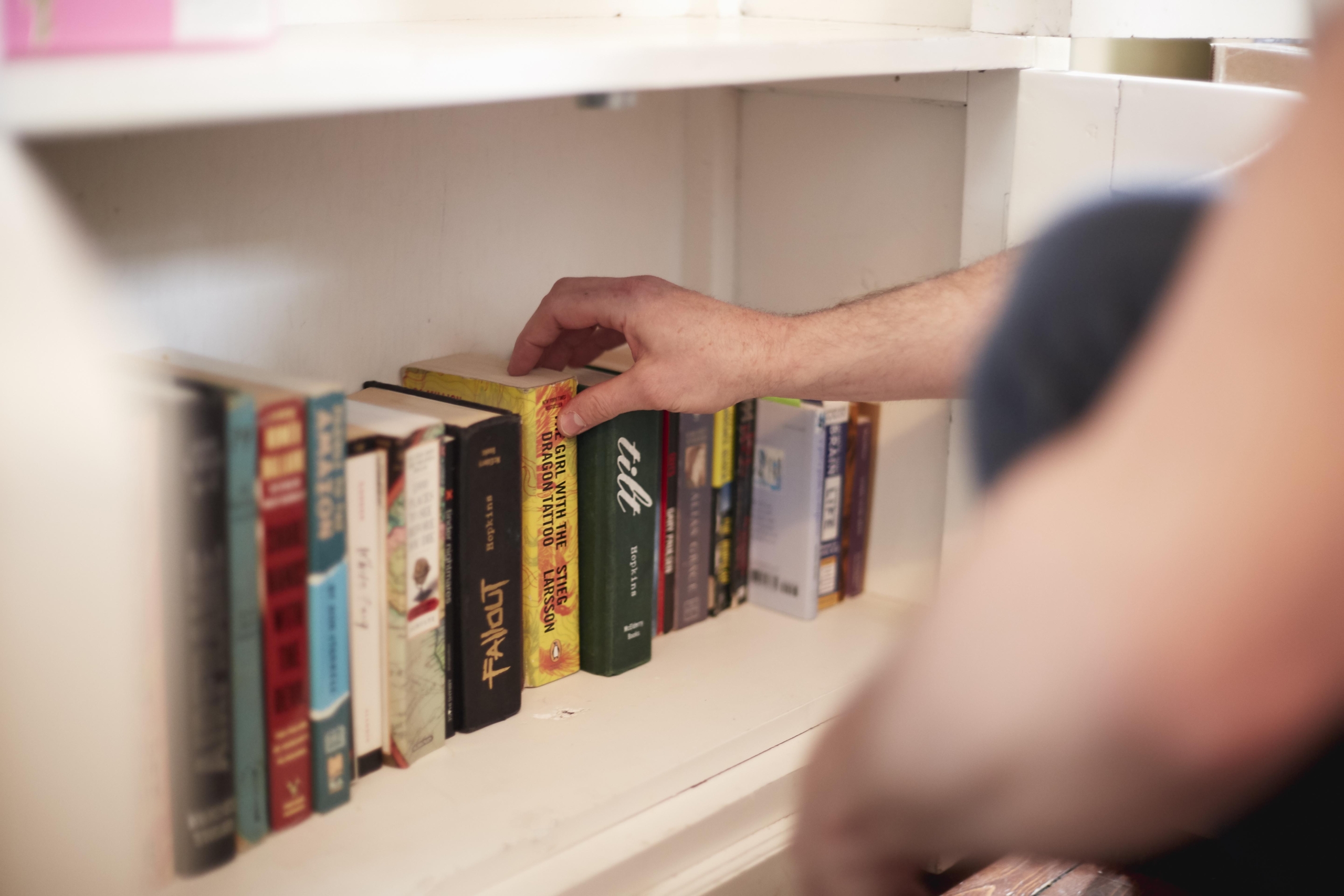
Image of someone organizing their bookshelf

3 Ways Successful Professionals Can Overcome Being Overwhelmed and Organize Their Homes

Many successful entrepreneurs, educators, creatives, and leaders wonder how they can thrive professionally yet feel overwhelmed and stuck when trying to organize their homes.

We don’t assume we can adjust our spines, create mortgages, or repair broken water pipes without training, so why is it different when it comes to organizing our living spaces?

As professional organizers, we often hear, “Why is it so hard to start? Why can’t I just do this? What’s wrong with me?”

Nothing is wrong with you!

You haven’t been trained to set up systems, structures, and supports (physical and mental) to help you declutter and organize your home, so no wonder you feel frustrated & overwhelmed.

3 ways to overcome that overwhelmed feeling that prevents you from successfully organizing your home:   

  1. Imagining how you’ll feel after making organizing progress 

Start by asking yourself, “What will an organized space LOOK and FEEL like? Then, take action.

PRO TIPS: Want to eat healthier? Imagine your pantry full of nourishing snacks. Want to relax more? Envision a calm reading space. Crave more simplicity? Imagine a streamlined home.

The power of your imagination cannot be underestimated – once you envision the change, your brain kicks into gear to support your intention.

  1. Starting easy, starting small  

To avoid feeling disappointed and dejected, not to mention exhausted, start with an organizing project that is not emotionally or physically demanding.

PRO TIPS: Instead of tackling an entire room or space, write out 3 goals on a sticky note, choose one category to organize, or declutter one drawer.

By starting with less emotionally taxing organizing tasks, your skills, confidence, and momentum will increase, which will make decision-making and moving forward easier.

  1. Kicking perfectionism to the curb  

Many derailed home organizing projects result from trying to be perfect. Let go of high expectations and trust that your efforts will pay off.

PRO TIPS: Live in a small condo? Use multifunctional structures and storage solutions. Cluttered creative? Set up specific workstations for your creative pursuits. Scattered online entrepreneur? Create a focused workspace.

To get and stay organized, your systems must align with your unique lifestyle and space.

For busy, successful professionals struggling to find organizational success at home (like they do at work), tapping into your imagination, starting simple and small, and letting go of perfectionism can lead to organizational success.  

For support in any of these areas, contact us at info@simplyhomeinc.ca and we will help you set up systems, strategies, and supports to help you succeed. www.simplyhomeinc.ca


Image of 7 orange files labeled and in alphabetical order

How to Create a Personal Filing System by Categorizing Your Life

Whether you’re considering a move, downsizing, or making a major life transition, one of the most important things to have in place is a well-organized personal filing system. And now that tax time is upon us, there is no better time to start.

Whether digital or paper-based, having clear categories to contain your important information is vital to keeping you organized and on track.

Without clear categories, stress, overwhelm and panic increase, which isn’t conducive to completing key tasks.

So, how do you decide which categories to use when creating a home filing system?

Although we’re unique lives, there are life categories that tend to repeat when organizing your files. This chart will help you start, modify, and update your personal filing system.


Major Folders


Potential Categories to Include


Notes

HEALTH ·       Reports, records, tests

·       Vaccination info

·       Assessments

·       Previous operations

·       Resources

Items in these categories can be kept inside one major folder OR in each family member’s file. The choice comes down to which division makes more sense to you.
INSURANCE ·       Home

·       Life

·       Car

Can be filed separately in major folder OR in specific item folders.

Ex: Auto policy in Vehicle folder

VITAL RECORDS ·       Birth certificate

·       Social Insurance Card

·       Marriage certificate

·       Will

·       Immigration papers

Can be filed separately OR in folders related to the person

Ex: SIN in family member file


TAXES ·       Current Year (for all claimable receipts, can be sub-divided)

·       Previous Years (with tax info sub-divided by year)

Once your current year is complete, place contents in “Previous Years”. Remove and shred the oldest file.

Ex: Shred 2013 once 2021 is filed. In Canada we must keep 7 years.

FINANCIAL ·       Banking records

·       Credit card documents + bills

·       Loan documents

·       Investment records

·       Memberships (Ex: gym)

Create one file for each account/credit card/loan/investment, etc.
HOME
  • Maintenance
  • Warranties
  • Real estate documents
  • Outdoor/Landscaping
  • Renovations
  • Décor
  • Rental property
Whether you create separate files for each category OR include them all in one major folder, keep receipts, contact info, and correspondence for each category as needed
VEHICLES ·       Purchase Agreement

·       Ownership

·       License + registration

·       Insurance*

Create a separate file for each vehicle.

*Insurance can be filed here or in Insurance.

WORK ·       Contracts + Salary info

·       Benefits

·       Major Projects

·       Job Applications

·       Resumes & Cover Letters

·       Potential Jobs

Create a file for each job, past and present.


Our focus is on creating a home filing system. If you run a business, a more robust system will apply.

KIDS ·       School Reports & Records

·       Assessments/Tests

·       Extracurricular classes, courses, sports teams, etc.

·       Summer Camp

·       Parenting*

Create a separate file for each child.

*Parenting resources can be filed here OR in Personal Development OR elsewhere.

PETS ·       Health records

·       Vaccination information

·       Grooming

·       Boarding & travel

 
TRAVEL ·       Passports

·       Health & Vaccinations

·       Past Travel

·       Future Travel ideas

A note about memorabilia. You can file pictures, correspondence, tickets, postcards, etc. OR set aside in a clearly marked bin.
FORMAL EDUCATION ·       Transcripts

·       Letters of recommendation

·       Copies of degrees & certificates


PERSONAL DEVELOPMENT ·       Personality/Self-assessment tests

·       Books, podcasts, articles, etc.

·       Art + Design + Craft

·       Courses

·       Wellness

·       Spirituality

 
SHOPPING ·       Receipts for gifts you’ve given

·       Gift ideas


PRO TIPS for a paper-based personal filing system:

  • Create an index with your categories laid out (like this chart!) and place in a prominent place
  • File chronologically with most recent documents in the front for easy access
  • Use easy to replace labels or green tape for easy modifying or replacing
  • Keep empty file folders, labels, and markers close by for immediate access
  • If combining different files in one major folder, clip them together for better organization
  • Memorabilia is often best to store in a clearly labelled separate bin


PRO TIPS for a digitally based personal filing system:

  • Use the same categories for digital files as you do for your paper files – your brain will thank you!
  • Create a table of contents or index and keep it handy for easy referencing and adjusting
  • If using an app, consider its functions, as well as the time and energy required to use it well
  • Be as specific as possible with file names Ex: Emily Grade 4 report card 2021” vs “Sally school”
  • Label all folders using the same format. Ex: HOME > Warranties > Fridge 2020


Organizing digital and paper files can feel overwhelming, as our life priorities shift, which means files and folders must be created and deleted regularly. A filing system is never static nor perfectly done.


By taking time to think through your life categories, you’ll set yourself up for success and access important information when you need it most. All conveniently placed in your personal filing system.


Need help with creating a personal filing system in your home? Contact us here or email us info@simplyhomeinc.ca to talk about how we can help you create a paper filing system that works!

Person making a snow angel. They are wearing a grey jacket, red gloves, red scarf and a red hat.

Surround yourself with nature, boost your mental health, and live the Norwegian Friluftsliv lifestyle

Norwegians believe that there’s no bad weather, just bad clothing”, which helps explain the latest Nordic lifestyle craze taking root, Friluftsliv. 

First coined by the Norwegian poet Henrik Ibsen in the 1850s, friluftsliv means “open-air living” and is rooted in spending time with loved ones, surrounded by nature.  

After the popularity of Nordic Hygge (cozying up inside with fuzzy blankets, cozy slippers, and warm tea), Friluftslive encourages “experiential connections to nature” as a way of life, which means lots of camping, hiking, fishing, foraging, ice climbing, and backpacking.

Beyond the obvious health benefits of fresh air and physical activity, Friluftsliv offers significant mental health benefits, especially as we reinvent socializing indoors and out during the pandemic.

Friluftsliv’s restorative benefits include:

  • Increasing capacity to manage stress and mood disorders
  • Providing a naturally safe “escape” from pandemic challenges
  • Connecting to family and friends in fresh air more consistently
  • Promoting mindfulness and mental strength
  • Increasing environmental stewardship

After a year and a half spent mostly indoors, and with many of us continuing to spend more time in our homes, Friluftsliv offers a calming and grounding effect when outside, especially on the coldest winter days.

If being outside is not an option, not to worry, Friluftsliv can be embraced indoors by:

  • Incorporating organic items, greenery, and earth tones
  • Buying landscape wall art, indoor planters, nature-patterned wallpaper
  • Choosing furnishings made from natural materials like rattan and cane
  • Placing furniture near windows or with a view outside to create
  • Integrating fire pits, wooden tables, space heaters, and blankets in your yard


Incorporating natural associations inside our homes is a great way to remind us of the simplicity and beauty of being outdoors.


In Norway, Friluftsliv is such a vital part of daily living that it’s actually protected by the “allemannsretten” or “right to roam” law which allows people to walk or camp outdoors nearly everywhere, even on private properties, as long as they’re respectful of the environment.


There are Friluftsliv courses taught in higher education and at the elementary levels to instill a respect and love for nature from the start of school and beyond.


While we may not have Friluftsliv courses offered in Canada (yet?), we are surrounded by beauty in nature, so the next time you feel overwhelmed, stuck, sad, or bored, it’s time to embrace your inner Nordicness, and enjoy the outdoors with those you care about.


And remember, “there is no bad weather, just bad clothes!”


paper

10 Ways to Reduce Paper Clutter in Your Home

Do you ever feel like you are drowning in paper? Are there bills, receipts, reminders, invitations, coupons, statements, flyers, and cards cluttering up your space, causing overwhelm and stress?

Paper clutter occurs easily unless we create systems for managing it on a regular basis. As tax time is upon us, let’s not forget how important it is to plan ahead to avoid paper overwhelm – see tip # 10!

The good news is managing paper clutter is achievable and below are ten ways to effectively organize and store the paper items you need and get rid of the paper items you don’t.

  1. Go Paperless with Statements and Bills

The best way to have less paper is to not let it enter your home in the first place! Going paperless is an important first step in decluttering paper. Transfer all your bills, statements and payments online. Even better, pay everything online, which helps timeliness and budgeting. The bonus of this is you will no longer need envelopes and stamps or trips to the mailbox.

  1. Purge your Paper

To begin, gather up ALL the paper in your home. Look in wallets, purses, bags, boxes, drawers, closets, cabinets and cars. Next, sort all papers into four piles: Recycle, Scan, Shred, or Save. Scan important tax, medical files, insurance and property documents onto your computer for safekeeping or create a file folder for key pieces of information. For memorabilia items (photos, cards, tickets stubs, etc.), put them into a labelled clear box/bin and then recycle or shred everything else.

  1. Recycle your Magazines and Newspapers

How many old magazines and newspapers are taking up space in your home waiting for that “one day” when you’ll re-read them? As this is an unlikely scenario, it may be time to recycle or donate them to a good cause. Artists and teachers often like magazines with pictures for their projects – the key is to get them out of your home soon to avoid any lingering donate piles! While you’re at it, unsubscribe from all the magazines you’re no longer interested in.

  1. Create a Filing System

There as many different filing systems to choose from, but the best ones seem to have these characteristics: they are spacious and easy to access and figure out. The key is to decide which space you will be using before buying anything. For an open desk, metal rails for hanging folders work well. In a closet, portable file bins work well, and if you need to see your files, a desk organizer works well. Whatever you decide, consider using as much vertical space as you can.

The next step is to take inventory of your life through creating categories. Give big categories like Career, Medical, Car, Pet, House, Kids, etc. a big folder. You can add sub-categories to them as you go. If colour coding helps, choose certain colours for specific categories and consider using painter’s tape instead of labels at first, as it gives you more flexibility when adding/changing items.

  1. Keep a Recycling Bag by your Front Entrance

By having a place to recycle by your front entrance, you can avoid bringing unwanted paper into your home. Worried about the visual impact? Keep a reusable bag hanging in the hall closet. Whenever you leave home, grab the bag and recycle your unwanted paper! You may also want to put up a sign indicating “No flyers” outside your front door to prevent unwanted paper clutter.

  1. Create an “Action” Area for Key Papers

We often have paper items that require us to act, often by a certain deadline. Put all those papers – RSVPs, bills, sign-up forms — in one spot. They could be clipped onto a big message board, kept  in an “inbox” tray, or mail organizer or placed in a basket by the entrance. Whichever you choose, make sure to deal with it daily or bi-weekly. Otherwise, it will just become another pile of paper clutter.

  1. Use a Calendar

By adding your important events to a calendar system, you avoid having to keep the actual paper flyers, invitations, etc. A digital calendar works well, however, if you want a non-tech version, get a desk or wall calendar. Each time you get a piece of paper with event information on it, put it into the calendar and recycle the paper.

  1. Showcase Photos and Memorabilia

If you have sentimental photos or memorabilia stored under your bed, in your closet or in a box, consider choosing your favourites to showcase. Photos and paper items can be framed or put into an album or memory box.  They can also be scanned and made into a photo book. Often, people feel overwhelmed by their photos so hiring a professional organizer can help you enjoy your memories now!

  1. Store Paper Items in the Right Places

The key to creating effective organizing systems is deciding what goes where and ensuring things get put back in their place. For everyday papers, a go-to spot that is easy to see and act on is key. Sentimental items can be displayed in nice boxes or frames on bookshelves and bookcases; coupons can be kept in a binder; office supplies (notebooks, folders, stickies, printer paper) can be kept in clear labelled containers; and recipes can be kept in a binder in the kitchen.

  1. Prepare for Tax Time

Investing time and energy into creating a system for tax-related paperwork pays off in the long run. Using a binder, labelled accordion file folder or box, label and clip all your receipts by category and keep them in one place for that tax year. When it’s time to submit your tax return, all your papers will be in one place ready to be reviewed. Once your return is complete, shred the documents you are no longer required to keep. In Canada, this is 6 years, so once your 2019 return is complete, shred the contents in your 2013 folder.

The next time you find yourself feeling overwhelmed about the accumulation of paper in your home, review these ten tips and know that if you need support to reduce paper clutter, we are here to help! Contact The Simply Home Downsizing Team at 416-819-1576 www.simplyhomeinc.ca

decluttering

Why It’s So Hard to Let Go of our Stuff

These days it seems like many people are on board with the idea of decluttering, owning less, and living more intentionally. It all makes great sense! By decluttering and choosing what items we need and love, our lives become easier to manage and we feel calmer and less overwhelmed. The added benefits of saving money (no more replacements) and time (no more wasting time looking for things) also becomes clear once we have less.

So, What Gets in Our Way? What Reasons do we Give Ourselves that Hinder Our Progress?

One way to think about it is to reflect on why we own things in the first place. Historically, objects were tools that were required for day-to-day survival – you needed an axe to chop wood, a knife to cut up meat, and shovels to dig holes. However, as society progressed, the world became more plentiful, and objects started to play a different role. They helped us do what we needed to do AND helped us confirm our worth in society.

Owning certain objects became a way to communicate. If you had a radio, you were the connection for others and had the power to disseminate information quickly…so better get a radio fast. This evolved to include many more objects, as there is no limit to what we can buy. Today, we see how quickly and easily Amazon and others can fulfill our desire to own something. As this happens, we move from being in charge of our objects to letting them be in charge of us.

So, Why is it So Challenging to Limit how Many Objects We Have, and Let Go of the Ones We Don’t Need?

In his book, Goodbye Things, Fumio Sasaki talks about the many challenges that arise when we try to discard, declutter, and downsize. He talks about the need to develop this skill, over time, so that it becomes a habit. As with other skills, you don’t just wake up and decide to become a world-class skydiver, a master chef, or fluent in Finnish. It takes time. You don’t just wake up and decide to have less stuff; you have to build the skill. Often, in trying to build this skill, we get stuck and can’t complete the task.

Ten Reasons We Get Stuck and Can’t Discard, Declutter, and Downsize Effectively:

  • It was expensive
  • What if I need it in the future?
  • I feel guilty throwing it away
  • I feel ashamed that it hasn’t been used
  • One day it will fit/work/match
  • I feel like I am throwing away an important memory
  • My pride is preventing me from letting it go
  • I feel bad for the person who gave it to me
  • It’s not the right day/time/hour/season
  • It’s just easier to leave it as is

If any of these reasons resonate with you, you aren’t alone. They are all very convincing. They can seem like truly sensible reasons to hang on to belongings we no longer need, use, or even want. However, letting go requires courage, determination and patience – and perhaps some help along the way.

The path of least resistance is common among us humans, it keeps us safe and in service of the status quo.  

Ultimately, if we can shift our thinking, imagine the feeling upon completion, and take action, we can absolutely create more time, space, money, energy and freedom in our lives.

Either alone or with professional organizing support from Simply Home Downsizing, there is a way to have less to live more.

Let’s Connect

Whether you need to organize your own space, help a loved one move into a smaller home, or manage an estate clearing, our team of experienced professionals will guide you carefully and comfortably to your desired result. Contact us today to learn more about our services.

~ The Simply Home Downsizing Team

wardrobe

Create a Simplified Wardrobe You’ll Love

Is 2020 the year to create a wardrobe that you love, that lasts, and is a true expression of who you are? If so, it is possible to create a sustainable and exciting wardrobe by taking into account these five elements.

  1. Set Your Intention – Envisioning the Future

First, being as honest as you can, you’ll want to reflect on how you feel about your wardrobe right now. Do you feel overwhelmed by the amount of clothes you own? Paralyzed by having to make daily wardrobe decisions? Guilty for not wearing what you have? All of these are common feelings to have when it comes to our wardrobes.

Now, envision how you want to feel after creating a wardrobe that suits you, your body, and your current lifestyle. Often, feeling more decisive, intentional, and excited about our clothing is a strong motivator for change. Specific examples include, “I will only keep, and wear clothing and accessories that make me feel confident and authentic” or, “I want to hang up all my clothes in one closet and never search for items again”.

  1. Acknowledging Rationalizations – This is Emotional!

Knowing how you want to feel, and look, is a great start, but we all know that rationalizations (aka excuses) are powerful forces that can easily sidetrack us. Just when we think we’re ready to let go, these “reasons” tend to get in the way of our purge:

  • This will fit when I lose weight
  • I should have one of these – doesn’t everyone?
  • This item cost a lot of money and I’ve barely worn it
  • This was a gift and I feel really guilty letting it go
  • This trend will come back one day, they always do
  • I’ll need this if I get invited to a special occasion
  • I may need this if I overuse/lose the “good” ones
  • It’s sentimental and part of my personal history
  • It’s something I wore before or may wear in the future
  • My child/cousin/friend might want it

These rationalizations can be very powerful saboteurs in our quest for less and must be addressed if we are going to cleanse our closets properly. It is best to acknowledge that our emotional attachment to our wardrobes can run deep, and it takes determination and commitment to work through these challenges to reach our goals.

  1. Implementing a Strategy – Time to Act!

Realize that you will have to overcome challenges inherent in a closet cleanse. Start your decluttering with an easy category such as socks. Gather all like items from ALL places in your home (i.e. gym bags, office, back door, closet) and put them into piles. Once you gain momentum, then move onto another category.

On your own or with someone else (non-judgmental is key!), hold up each item and ask yourself:

  • Do I like this?
  • Do I wear this?
  • Does it make me FEEL good?
  • If I didn’t own this already, would I buy it again? How much would I pay for it?

Decide if the item is for keep, donate, sell, consign, repair, return, etc. Have clear bags ready along with green tape and a sharpie for labelling. With your piles in place, ruthlessly decide what goes back into your closet and drawers. Then, donate unwanted clothes, plan a clothing swap, put returns in your car – do whatever  it takes to get the items out of your home without delay! Celebrate your progress and keep going!

  1. Capsule Wardrobe

Capsule wardrobes are a popular topic lately, and it’s no wonder given our realization that having too many clothes and accessories can be extremely stressful. Creating a capsule wardrobe is a specific type of closet cleanse that involves clearing out unwanted or unused clothes and replacing them with a small number of highly versatile garments, that can be worn together.

As everyone has different tastes and needs, there are many ways to create a capsule wardrobe. However, these tips will help in any situation:

  • Decide on a number you can work with and choose clothes and accessories accordingly. i.e. choose 50 items to wear each season. Replace old pieces with new ones when needed.
  • If decluttering is difficult, put items in a “maybe box” and place the box out of sight for 1 to 3 months. If you haven’t needed, wanted or thought about the items after the time has passed, you can let go of them guilt-free, knowing you won’t miss or need them.
  • You can also try out a capsule wardrobe for a month or two. Put your other clothes out of sight and only use the clothes in your capsule. See how it feels after the time has passed and decide your next steps.

Do your best to only keep the things you love, hold happy or important memories for you, you wear often, feel good in and suit your personal style.

  1. Benefits

After deciding, sorting, decluttering, and letting go of clothing and accessories, hopefully you will feel some of these wonderful benefits:

  • Less decision fatigue because choosing what to wear becomes less stressful
  • More organized and clutter-free closets and drawers
  • Less spending money, more saving money!
  • Increased self-confidence knowing your wardrobe has been intentionally chosen
  • Regain control of your style and no longer be a slave to fashion trends
  • Increased self-confidence learning about your personal style

Whether you create a capsule wardrobe or simply declutter your closet, remember to be purposeful with your purchases so you add things to your wardrobe that will work well for you and you’ll wear often.

If you find that you could benefit from professional support, we are here to help! Please contact us for more information.

Embrace Your Inner Swede and Lagom Your Life

Do you ever feel like you have too much of some things and not enough of others? Perhaps too much clutter and not enough open space? Too much to do and not enough time to do it in? Too much stress and not enough calm?

If the “too much/too little” battle seems like a constant struggle, consider adopting lagom. Lagom is a Swedish lifestyle that translates to “having just the right amount – not too much, and not too little.”

Many believe that the word lagom comes from the time when Swedish farmers and Vikings shared drinks communally from the same horn or bowl. In this sense, lagom is seen as a force for good, connecting people to place and community, both crucial ingredients to the Swedish way of life.

What can we learn from the land of intentional design, minimalist décor, capsule wardrobes and IKEA?

Think of lagom as a process where you de-clutter and simplify your life in order to increase emotional wellbeing. What’s not to like?  When we feel like we belong in our space, have balance in our life, and a shared responsibility to our community, we tend to feel better.

So, why it is that even when we know what is just right/enough, we go overboard into excess?

Is it societal pressure to consume? The ease in which we can purchase goods 24/7? Our inability to make decisions about our belongings? All of the above?!

By implementing the “lightweight lifestyle” of lagom into our lives, how we create happiness increases. By having a more lagom life, we are apt to feel more connected, intentional and purposeful. Specific benefits include:

  • physical: less material obsession, less consumption, more de-cluttering, less cleaning
  • mental: stops mind from spiraling, more focus, embrace life consciously, more creativity
  • financial: improves as consumption decreases, thriftier, re-use items

According to Niki Brantmark, author of Lagom: Not Too Little, Not Too Much: The Swedish Art of Living a Balanced, Happy Life, “lagom is about finding a balance that works for you. It encourages curiosity and experimentation versus rigid definitions of what “just right” looks like.”

Brantmark’s top three lagom suggestions:

  1. Streamline your bedroom:Create a clean, calm space that de-clutters your mind and restores your body so you feel organized. Only keep out the essentials.
  2. Keep your space clutter-free: Manage the reality (and overwhelm) of clutter by putting items away, or in a basket/bag so they can be put away later. Donate/sell/discard what’s not being used.
  3. Make sustainability a priority. Less lights, more candles, less plastic, more re-usable mugs, bottles and bags, shop gently used, and eat your leftovers!

“Applying a sense of lagom to our everyday lives—in how we live, work, eat and play – might just be the trick for embracing a more balanced, sustainable lifestyle that welcomes the joy of existence rather than those of consumption, states Anna Brones in her book, Live Lagom: Balanced Living the Swedish Way.

At Simply Home Downsizing, we often work with clients who are trying to achieve “just the right amount” in their home, often showing up in the form of de-cluttering, organizing and downsizing. By adopting the Swedish lagom approach, we can all work towards living a more balanced, sustainable life on our own terms.

Whether you need to organize your own space, help a loved one move into a smaller home, or manage an estate clearing, our team of experienced professionals will guide you carefully and comfortably to your desired result. Contact us today to learn more about our services.

~ The Simply Home Downsizing Team

Heirloom Avalanche Simply Home Downsizing

Preparing for an “Heirloom Avalanche”

What do families do when one generation wants to pass on their “valuable” family heirlooms to a younger generation, but there are no takers?

As someone in the “sandwich generation” (raising my own child while also caring for my aging parents), I think about the day when my parents (ages 77 and 84) will be moving out from their house of 50+ years. Their decision might be to downsize due to financial concerns, reduced mobility, increased health-care requirements, or social isolation.

Whatever the reason, there will be many decisions to make, including what to do with the many items accumulated over the years. Some will be easier to deal with than others  – furniture can be sold, clothing and household items can be donated, papers can be recycled, but what will my sister and I do with the items that my parents want to “keep in the family”, as family heirlooms, passed down from one generation to the next?

An Aging Population 

Statistics Canada reports that 1,000 Canadians will be turning 65 every day for the next 20 years, which means a significant increase in downsizing, and by extension, an increase in the desire to find new homes for heirloom treasures. The “heirloom avalanche” is happening and will only continue to grow as baby boomers age and try to purge and pass on their heirlooms to their children or someone else.

Learning to Say No  

I wonder how I can I say “no” to the china set? The brass collection? The end tables from Colombia? The crests from Hungary? Don’t get me wrong, my parents have great taste and there are several items I know my sister and I will enjoy keeping in our families (I do love the Colombian dish set and decorative brass wall plate!), but there is simply too much stuff for us to take. We don’t have room for it all – real estate in my house is valuable – and with more focus on decluttering, living with less, and choosing experiences over stuff, many “treasured heirlooms” that would have been passed down through the generations, may have reached the end of their life.

But how to say “thanks, but no thanks” to the items my parents feel are special and valuable, and want to pass down, without hurting their feelings?

How to Prepare

What can families do to prepare for a possible “Heirloom Avalanche”?

  • Protect your relationships. Be honest and open about the process and discuss how you will proceed as a family.
  • Sort through family items together, reminiscing and reflecting on their meaning along the way. Often taking the time to do this eases the process of letting family heirlooms go.
  • Donate special items to charities and organizations you and your family feel strongly about.
  • Sell your special items in an auction, consignment shop or online (i.e. Kijiji, Facebook Buy & Sell groups).
  • Hire someone to coordinate a contents sale, either online (i.e. Maxsold) or onsite. The cost is usually based on a commission split of items sold.
  • Book an antique dealer or appraiser to visit your house, look at your treasures and make you an offer.
  • Hold a garage sale, which is a good way to connect with neighbours and locals, but not always the best way to make money. Successful garage sales require time and energy, not to mention good weather!

How We Can Help

When dealing with family heirlooms, the key is to take it step by step to determine what works best for these special items. Letting go of items that no longer fit your lifestyle, at any age, is a challenge. As professional organizers, we can help support your process, avoiding the stress of an heirloom avalanche down the road.

Whether you need to organize your own space, help a loved one move into a smaller home, or manage an estate clearing, our team of experienced professionals will guide you carefully and comfortably to your desired result. Contact us today  to learn more about our services.

Until Next Time,

~ The Simply Home Downsizing Team

essentialism simply home toronto downsizing

More Clarity, Less Clutter Through Essentialism

Do you ever feel the relentless pressure to do, and have, it all? Or feel overwhelmed by the prospect of de-cluttering and pairing down what you own? Do you find it hard to keep your momentum going once you start?

If you are committed to de-cluttering your belongings, streamlining your space, and letting go of the things you no longer need, these feeling are natural. To combat what I deem progress inhibitors, you may want to consider the way of the Essentialist.

Based on ideas of Essentialism: The Disciplined Pursuit of Less by Greg McKeown and my own personal experiences as an organizer, the philosophy of “less, but better” truly can help. It allows us gain more clarity, control and joy throughout the process of streamlining our space, belongings, and life.

So, what is Essentialism? According to McKeown, it’s the “systematic discipline of exploring what is absolutely essential, eliminating everything else, and executing a clear plan towards success.”

Why choose essentialism?

By doing so, we can actively choose to live by design; rather than by default, and reclaim control over our choices. Sounds like a great approach. But as we know, it’s not always easy to implement good ideas. Realistic goals must be set, decisions must be made, and courage is required.

McKeown teaches that the essentialist uses a disciplined 3-step approach to evaluate the use of any given thing in your life. Using a closet bursting at the seams with clothes, accessories and more (feel free to substitute any other cluttered space you might have!), below is an example of how to tackle the de-cluttering of that closet using this approach.

Step 1: Explore and Evaluate

Start with your end goal in mind. Ask yourself: How do I want to feel when I open my closet? What items need to be easily accessible? How do I deal with things I no longer need or use? How much time and effort should/can I put into this process? What will be my biggest challenge in all of this?

Step 2: Eliminate

Actively sort clothes & accessories into keep, donate and undecided piles. For the undecided pile, pick up each item and ask, “Would I buy this item at full price if I didn’t already have it?” “Does this item bring me joy?” (Thanks Marie Kondo for popularizing this phrase!) And “Is this representative of me at this time in my life?”

Step 3: Execute

Systematize your actions to stay sorted, tidy and organized. Maybe it’s a one item in, one item out policy, or a monthly purge or seasonal edit – do whatever works for you. Keeping a reusable bag close by for unused items and making sure you know where and when to drop off/donate these things, helps. Removing obstacles (i.e.: not enough time, competing interests, lack of initiative, feeling overwhelmed) and celebrating small wins (i.e.: “I donated two bags to a women’s shelter”) are keys to staying motivated and committed to the process.

This 3-step Essentialist approach takes focus, commitment and stamina to be carried out successfully. Knowing what activities and efforts are needed to keep progressing is key. It ensures that there will be fewer roadblocks in the way.

“It’s like dislodging a boulder at the top of a hill – all it takes is a small shove and then momentum naturally builds,” says McKeown.

Keep At It!

Sometimes we get off to a great start, but then become stuck in indecision. It usually sounds something like this: “I may need this in the future,” “My grandmother gave this to me,” or “My kids might want this.” What to do then?

Try the 90 percent rule. When making decisions, think about the single most important criterion for that decision and give it a score between 0 – 100. If you rate it below 90, it automatically becomes a 0 and you reject it – no more should I or shouldn’t I with something that rates 65%! So, if wearability is your most important criterion, pick up the item, score it out of 100. If it scores above 90, keep it, if below 90, time to let it go.

Although our lives aren’t static like the clothes in our closet, we can use the same Essentialist approach of exploring & evaluating options, eliminating the unnecessary, and executing the plan when it comes to making life decisions. Only we know what is essential in our lives, and hopefully an essentialist approach can help us achieve more clarity and joy, with less stress and clutter. In order to live to our highest potential. Remember, less but better.

Whether you need to organize your own space, help a loved one move into a smaller home, or manage an estate clearing, our team of experienced professionals will guide you carefully and comfortably to your desired result. Contact us today to learn more about our services.

~ The Simply Home Team